
When Buying a Home Feels Like a Pipe Dream
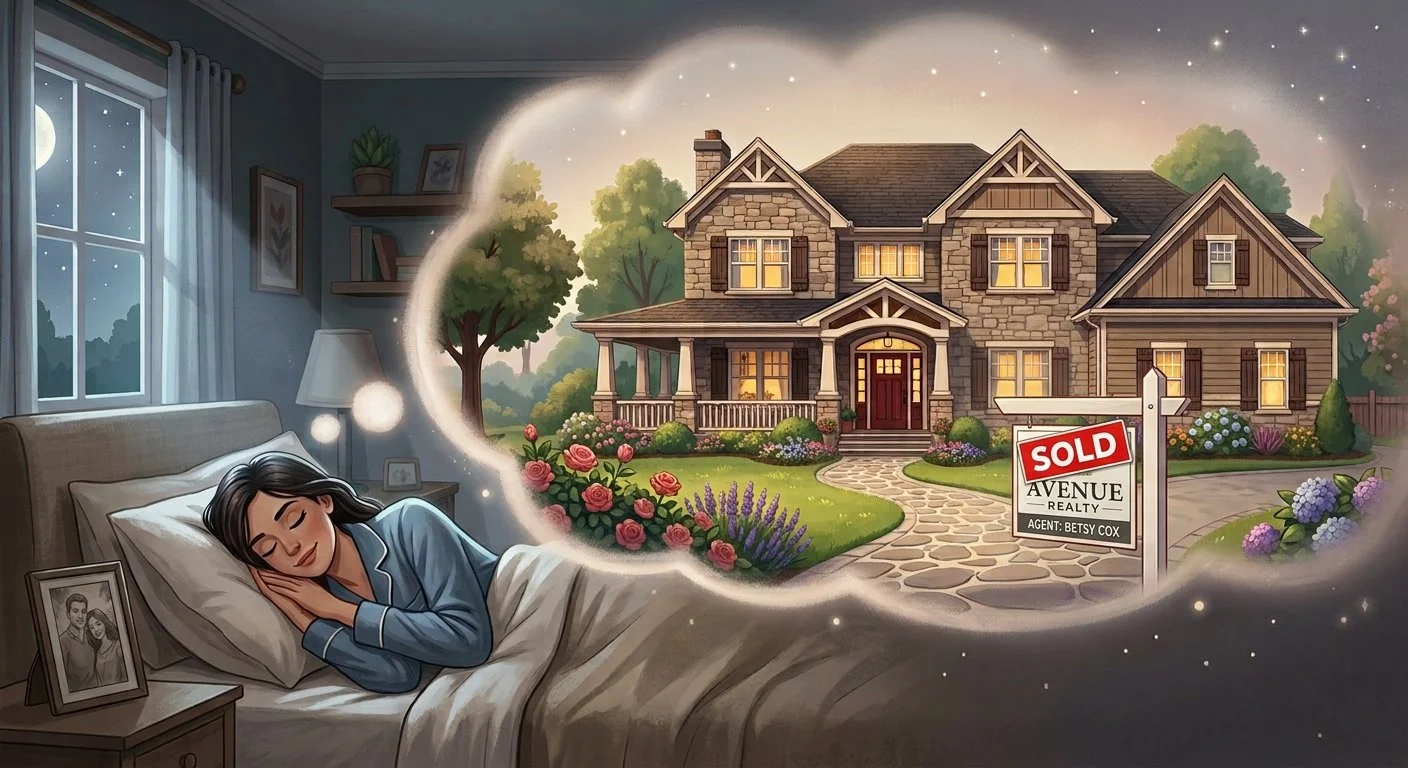
I totally get why homeownership feels out of reach for so many people today—because, honestly, it sometimes feels out of reach even to me.
The first home I bought was in 1998. It cost $220,000, and I remember being shocked that we qualified for the mortgage. And we had two incomes.
Fast-forward to today, and my kids' rents are higher than the monthly mortgage payment we had on that house.
So when a young person tells me, “I don't think I’ll ever be able to afford to buy a house,” I don't think they're being dramatic. I get it.
And Charlottesville doesn't make the equation any easier. For a relatively small metro area, we have remarkably high home prices. Depending on the source and time period, recent median sale prices have been hovering around the $500,000-plus range.
That's a lot of house to buy when you're just starting out.
But here's something I wish more first-time buyers knew:
Your first home doesn't have to be your forever home. In fact, it almost never is.
Yes, you should be happy there. You should like coming home. You should be able to picture yourself having friends over, making dinner, walking the dog.
But if you're stretching to make that first purchase happen, I think it's also worth asking another question:
Could this house help me buy my next house?
That just might change the way you think.
Instead of asking only, “Do I love the kitchen?” or “Is this exactly the neighborhood I imagined?”, you can also ask:
Where is this neighborhood headed?
Is it already established and highly desirable? Is it an area that's beginning to see consistent increases in value? Is it "up and coming" or perhaps a little overlooked right now?
Sometimes the best opportunities are hiding in plain sight.
We experienced this ourselves.
When we bought that first little home, we chose a neighborhood that was in transition. It wasn't the obvious choice. We thought of it as a bit of a hidden gem.
We called the front of that house "the odd facade" - just a flat front with no visual appeal. When interest rates dropped, we refinanced and were able to add a wrap-around front porch. A couple of years later, we added a small addition with two rooms. Those changes cost us $46k. The house 'lived better. And the added curb appeal was undeniable.
Eight years later, the value of that home had tripled.
That appreciation gave us the ability to comfortably move into our forever home without increasing our mortgage payment.
Was that guaranteed? Absolutely not. Would I tell every buyer that a house will triple in value? Definitely not.
Real estate doesn't come with guarantees. A lot of luck was involved in our getting in early on what is now one of the hottest neighborhoods in DC. But we did make choices I'm proud of.
And it taught me something that has stayed with me ever since:
Where you buy can matter just as much as what you buy.
Look beyond the pretty kitchen.
When you're buying your first home, it's easy to fall in love with the house that has the gorgeous kitchen, beautiful floors and shiny new finishes.
And there's nothing wrong with that!
But sometimes the less glamorous house has more potential.
Maybe it's a great house in a neighborhood that's starting to turn a corner. Maybe it needs paint, updated lighting, landscaping or a bathroom refresh. Maybe the kitchen is dated but perfectly functional.
Those are things you can change.
And some improvements can make the home more enjoyable for you while also potentially adding value when it's time to sell.
That's where a good Realtor can be helpful—not just in finding you a house, but in helping you think strategically about the house you're buying.
What improvements are worth making? Which ones are likely to pay you back? Which projects should you skip? What does the neighborhood's sales history tell us?
Those are very different questions from simply asking whether you like the backsplash.
And here's another consideration: the type of home.
I've worked with a lot of young buyers who are understandably attracted to new townhomes.
Walk into a brand-new townhome with beautiful countertops, gorgeous bathrooms, modern flooring and all the latest finishes, and it's hard not to think, This is what I want. In fact, I've had quite a few clients say, I can't believe I can afford this!
Because yes, the price of a new townhome can be the same or lower than the price of a smaller, older single-family home that needs cosmetic updating.
But if your goal is to use your first purchase as a stepping stone to your next home, it's worth looking at the long-term picture.
Single-family detached homes can have an appreciation advantage over attached homes in some markets, in part because a townhome may always be competing with the next wave of shiny new construction. That has proven true for much of our area.
I am absolutely not saying don't buy a townhome. I'm saying understand what you're buying.
Look at the neighborhood. Look at the supply of similar homes. Look at what's being built nearby. Look at the history of appreciation. Look at the HOA. Look at what future buyers are likely to want. Think about how long you want to stay there.
And then consider not just how much you love the home today—but how desirable you think it might be five or eight years from now.
That first home is a launchpad.
For some buyers, the smartest first home may be the one that checks every box.
For others, it might be the home that checks most of the boxes, costs a little less, and gives them room to build equity.
Maybe you live with the dated kitchen for a few years.
Maybe you paint this year.
Make some updates to the bathroom next year.
And improve the landscaping the next.
Maybe you discover that the neighborhood you weren't initially sure about becomes one of the places everyone suddenly wants to live.
And eventually, when you're ready for that next house, you may have a few things you didn't have when you started: (1) equity; and (2) a home with added curb appeal & updates.
That doesn't make today's affordability challenges disappear. And I'm not suggesting that everyone should simply "find a cheaper house." For many people, the numbers genuinely don't work.
But if homeownership is a goal, I do think it's worth looking at your first purchase differently.
You don't necessarily need to find your dream house.
You need to find a good house in a good location at a price you can manage—with a little potential.
Because your first home doesn't have to be where you end up.
But it just might be the house that helps you get there.